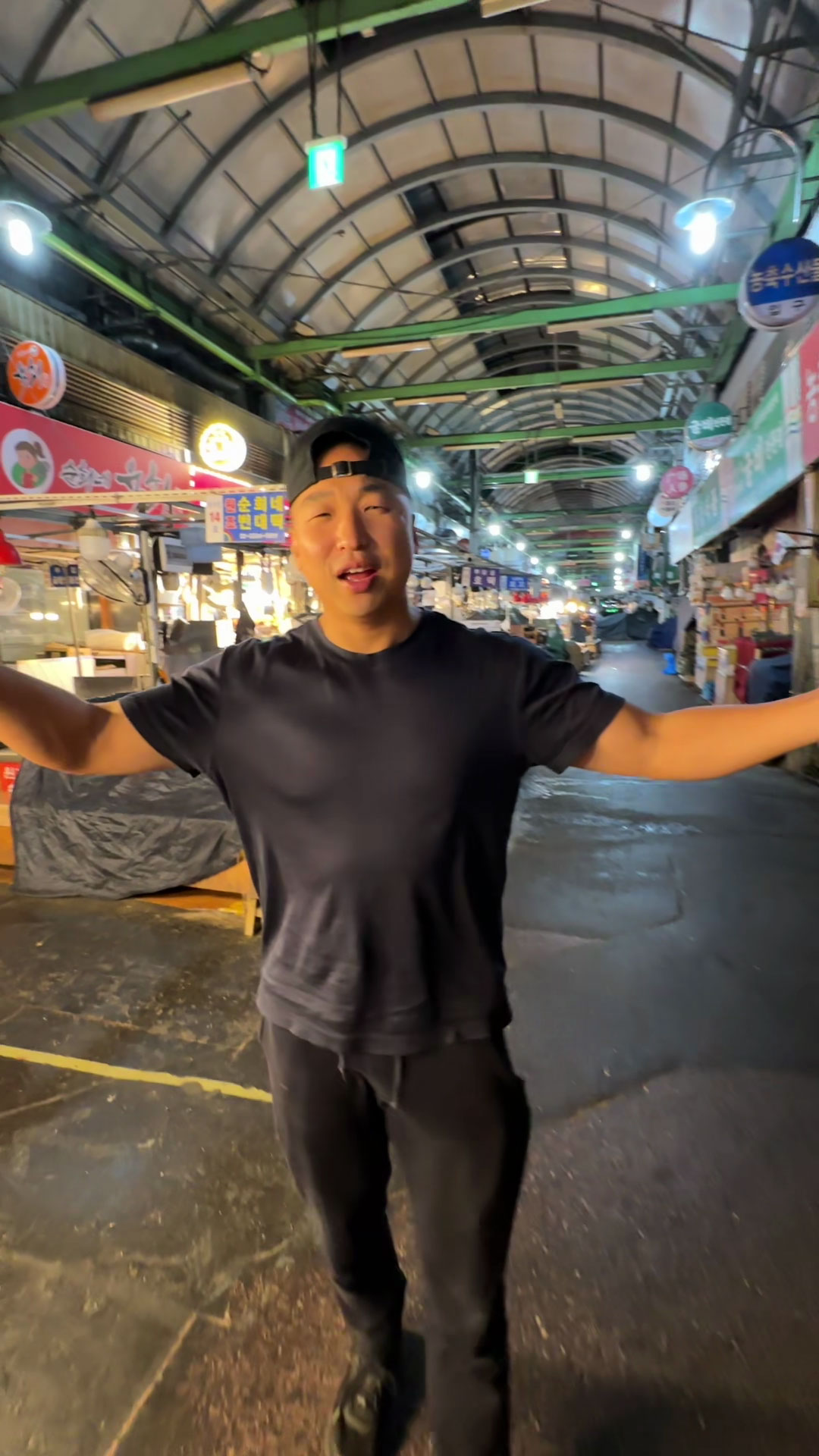
Gwangjang Market is one of Korea’s largest and most popular markets. It’s over 120 years old and has evolved from small agricultural and fisheries trading to a marketplace for a wide variety of products.
Today, the market is a go-to place where traditional Korean culture meets modern trends. It literally offers everything, and visitors can explore a vibrant mix of:
- Apparel: Fabrics, hanbok, and trendy clothes
- Wedding and Home Essentials
- Fresh & Dry Goods: Produce, snacks, and souvenirs
- Authentic Eats: Exceptional kimchi and banchan you can buy to-go. These are unbeatable recipes from local ahjussis and ahjummas!
Besides these, Gwangjang Market is now even more renowned for its traditional street food alley, being featured on various TV shows and Netflix documentaries. It’s one of the most talked-about spots in Korea, and people have mixed feelings about it.
Here, I’ll focus on this topic, weigh in, and share my top tips and must-tries when you plan to visit. Treat this as your local guide!
Basic Information and How to Go to Gwangjang Market
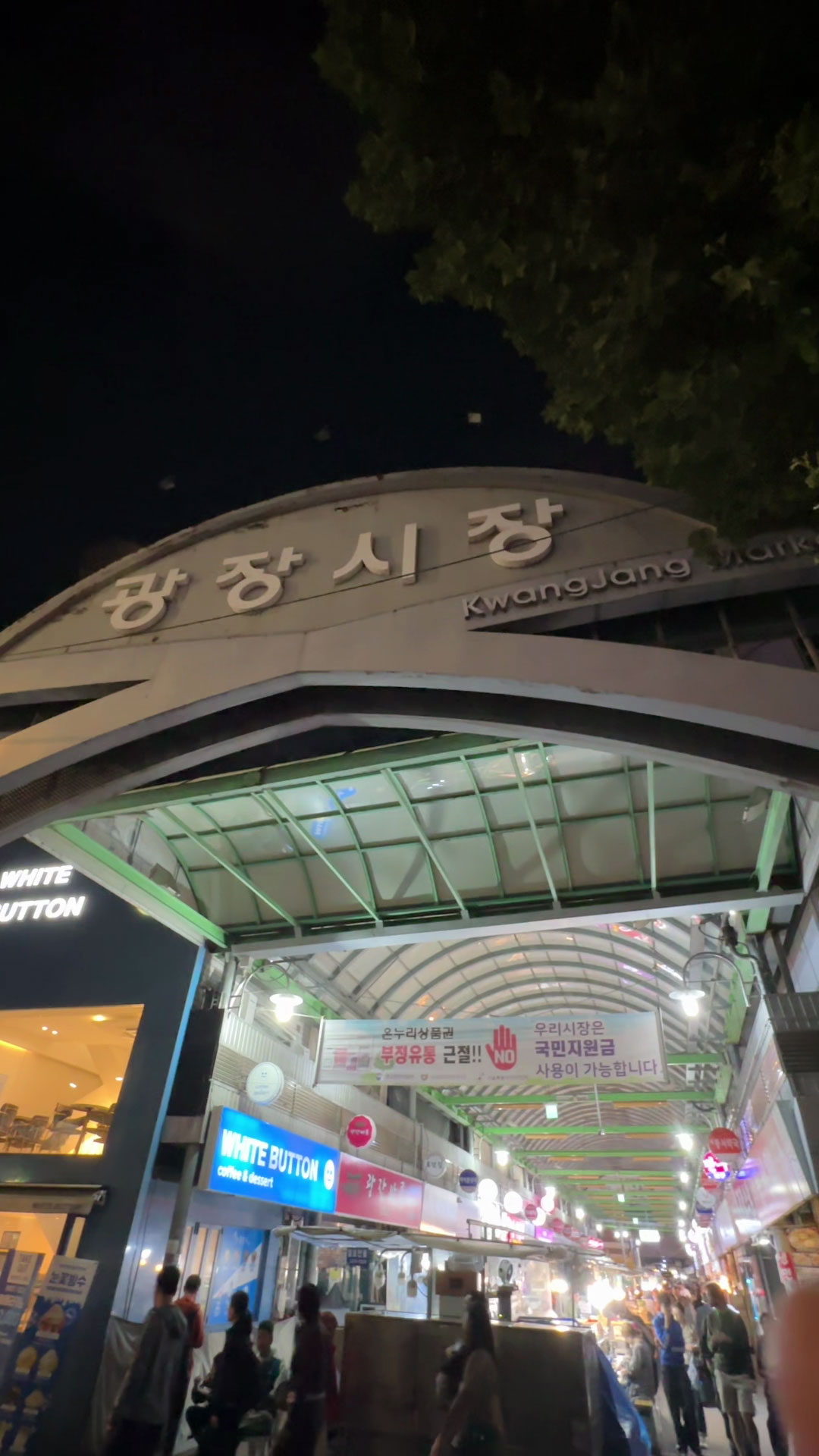
Address:
- 88 Changgyeonggung-ro, Jongno-gu, Seoul
- Jongno 5-ga Station in Subway Line 1 and Bus Stops
- Best to download Naver Maps to help with navigation, as Google Maps may not work. The app will provide the best transport route for you from your location.
Operating Hours:
- Open from 9:00 AM to 6:00 PM
- Some food stalls do not open until 11:00 AM, and some do not close until 11:00 PM
- Some stores may close on Sunday
6 Tips Before Going to Gwangjang Market
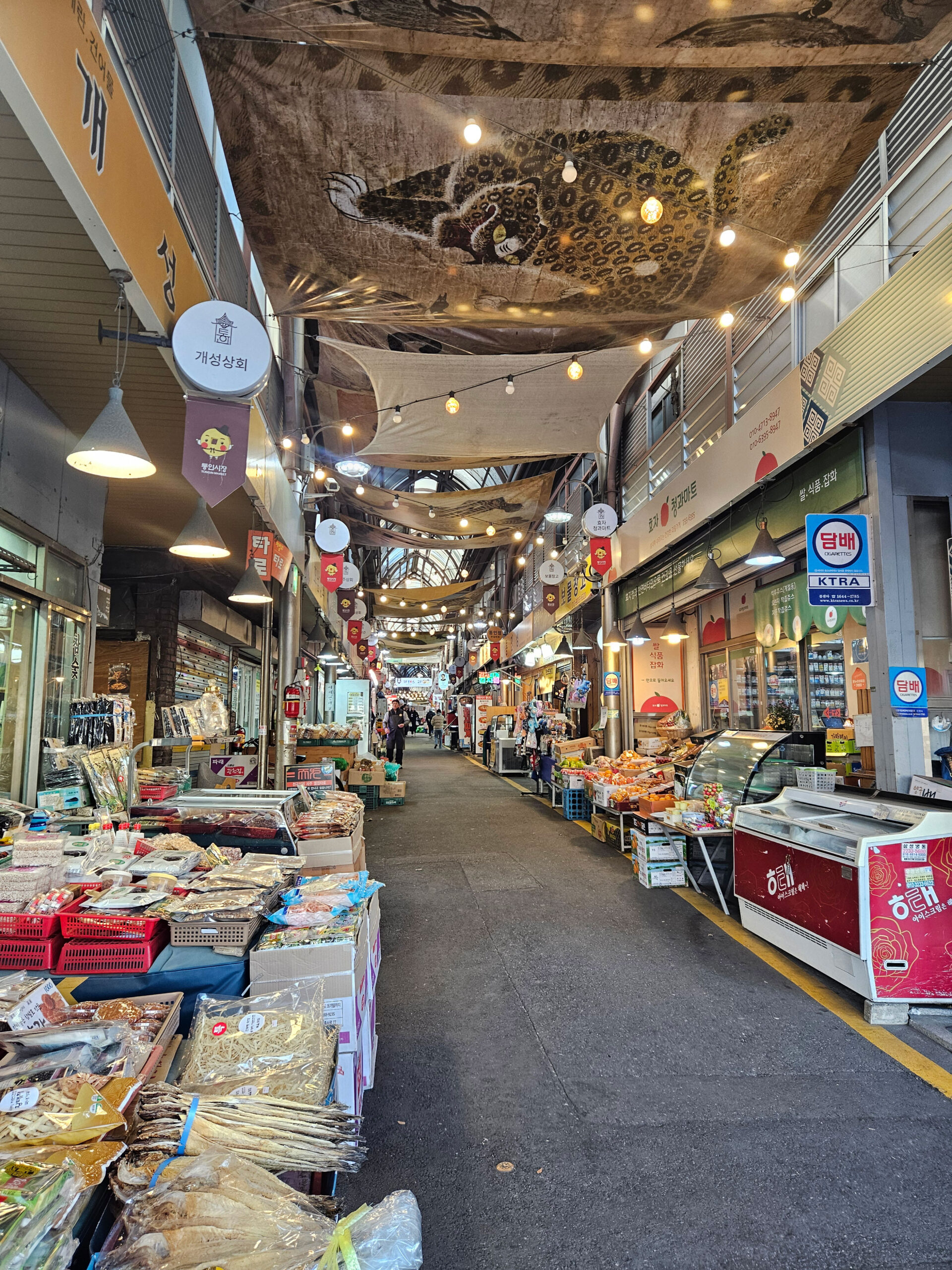
1. Don’t Be Afraid of the Language Barrier
The ahjummas don’t speak English, but they’ve learned how to communicate with tourists. Menus are readily available in most stalls with names and prices. You can simply translate these online, then point out what you like and how many orders you will get.
2. Soak in the Hustle and Bustle
Be prepared to sit on benches in front of the stalls with other people beside you. Basically, you find a seat, place your order, eat, pay, and go. You don’t necessarily need to rush your meal, but you can’t linger long after you are done because there are probably other people waiting to be seated as well, knowing that the market is packed.
3. Unspoken Minimum Order Rule
Be aware that some stalls may have an unspoken minimum amount of order for you to be accommodated. Some stalls may not serve you if you’re 2-3 people ordering 1 item, just leave, and there’s no need to argue. But this does not apply to all stalls; there are some who are nice and will still gladly accept, no matter how little or much you order.
4. Use Your Best Judgment on Where to Eat
Know that in the food alley, there are lots of stalls that offer the same thing, so check out the lines, how the food looks (freshness, cleanliness, etc.), and its value for money. I can assure you there is still good ones out here.
This place also has had some conversations about being overpriced, but you can simply compare among the stalls.
5. Prepare to Pay in Cash
This is a traditional market, and some locals still do not accept online payment or credit cards, so prepare accordingly.
6. Choose When’s the Best Time to Come
My advice is simply that if you want the food fresh, come in the daytime, but lines may be long. If you don’t want that many people, then you can also come late in the afternoon until evening, but the quality may differ for some stalls, and some might be closed.
Must-Try Traditional Street Food in Gwangjang Market
Mayak Kimbap and Soondae dipped in Tteokbokki
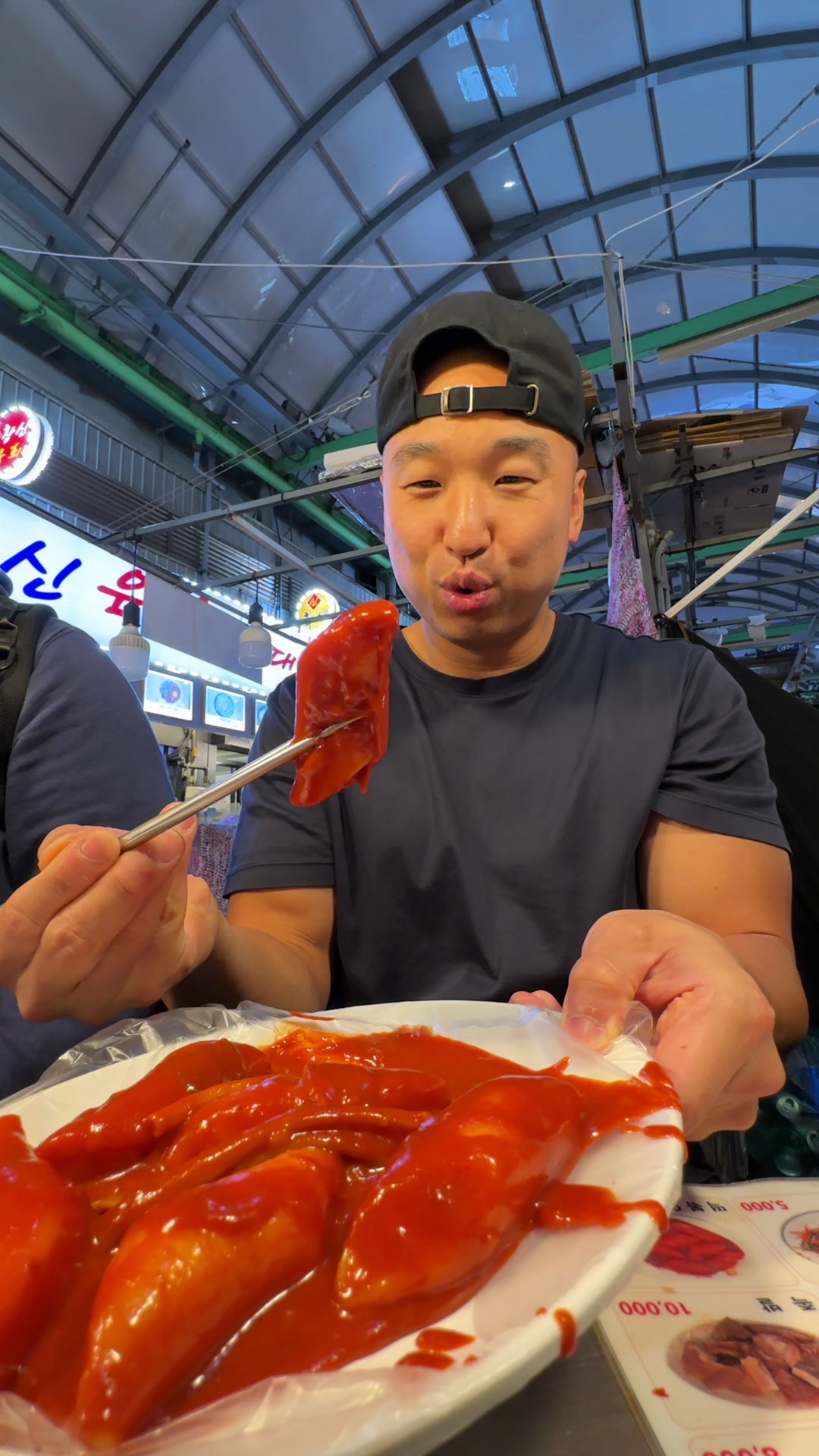
Mayak Kimbap are mini seaweed rice rolls filled with veggies and smothered with sesame oil. These are highly addictive; you won’t even notice you’ve already eaten a handful.
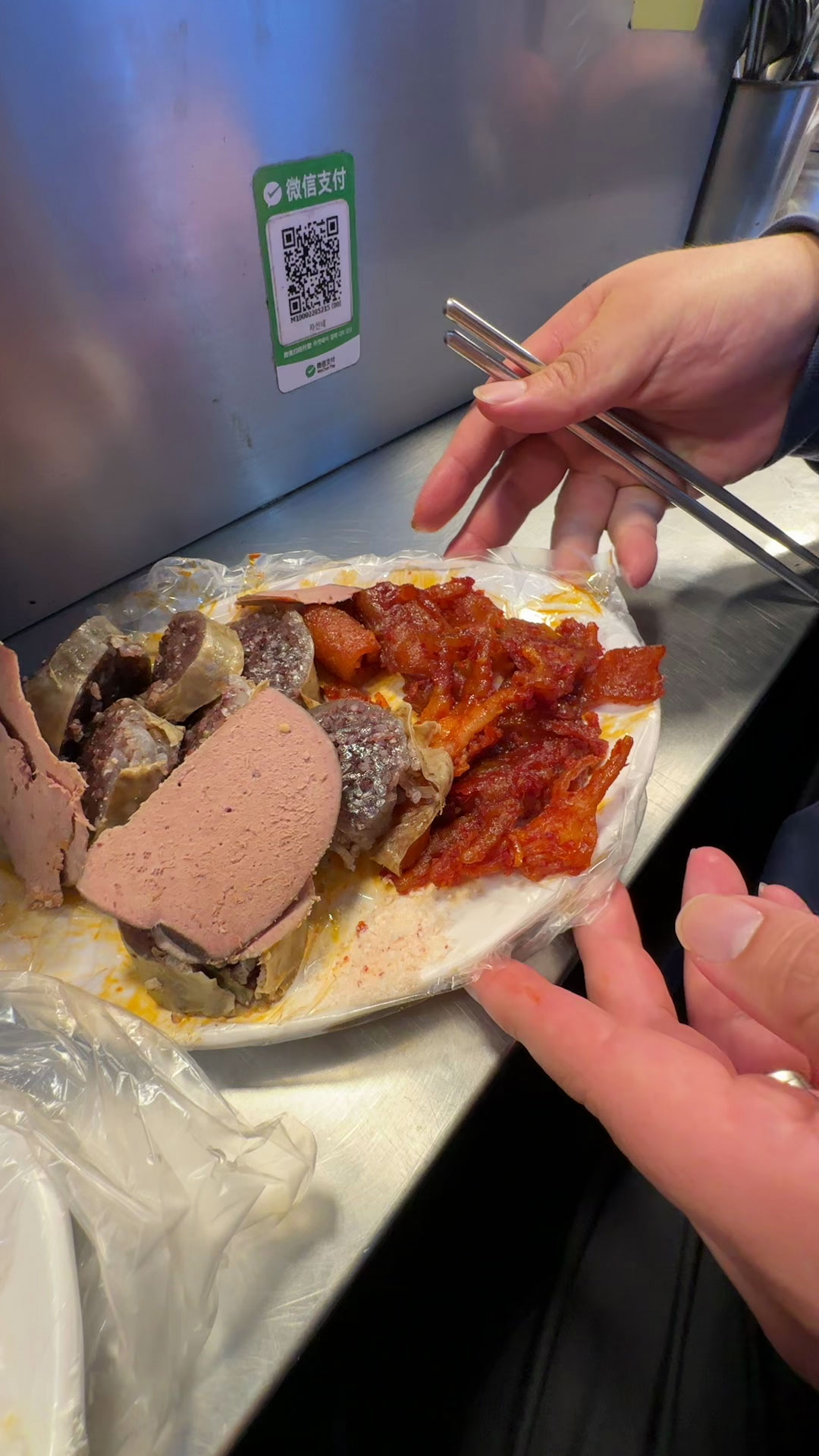
Meanwhile, soondae are blood sausages. It’s made from seasoned sweet potato noodles mixed with a small amount of pork blood and encased in pork or beef intestine. Sometimes the same stalls will also sell exotic food like pork head, lungs, and feet. They are usually steamed, and a few pieces are included along with the blood sausage.
When you look at the simmering tteokbokki in those large, deep griddles, I’m sure you’ll be enticed. Smother your kimbap or soondae in that spicy sauce, and enjoy!
Spicy Pork Skin and Chicken Feet
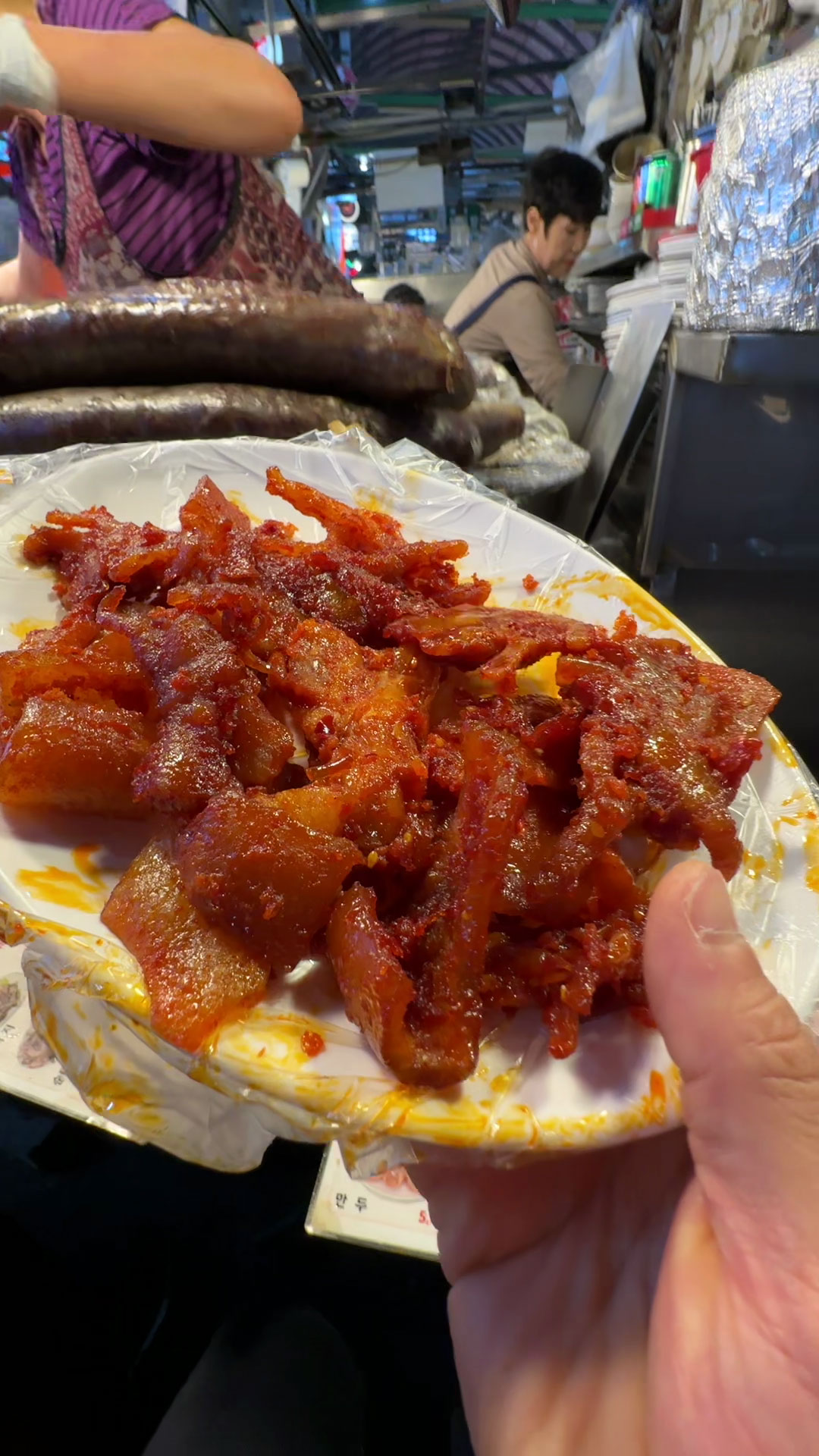
These are usually cooked in a spicy, sweet, and savory stir-fry sauce. They’re chewy and delicious, but it’s definitely an acquired taste. Nevertheless, it’s still a great anju or drinking munchie!
Yukhoe Tang Tang
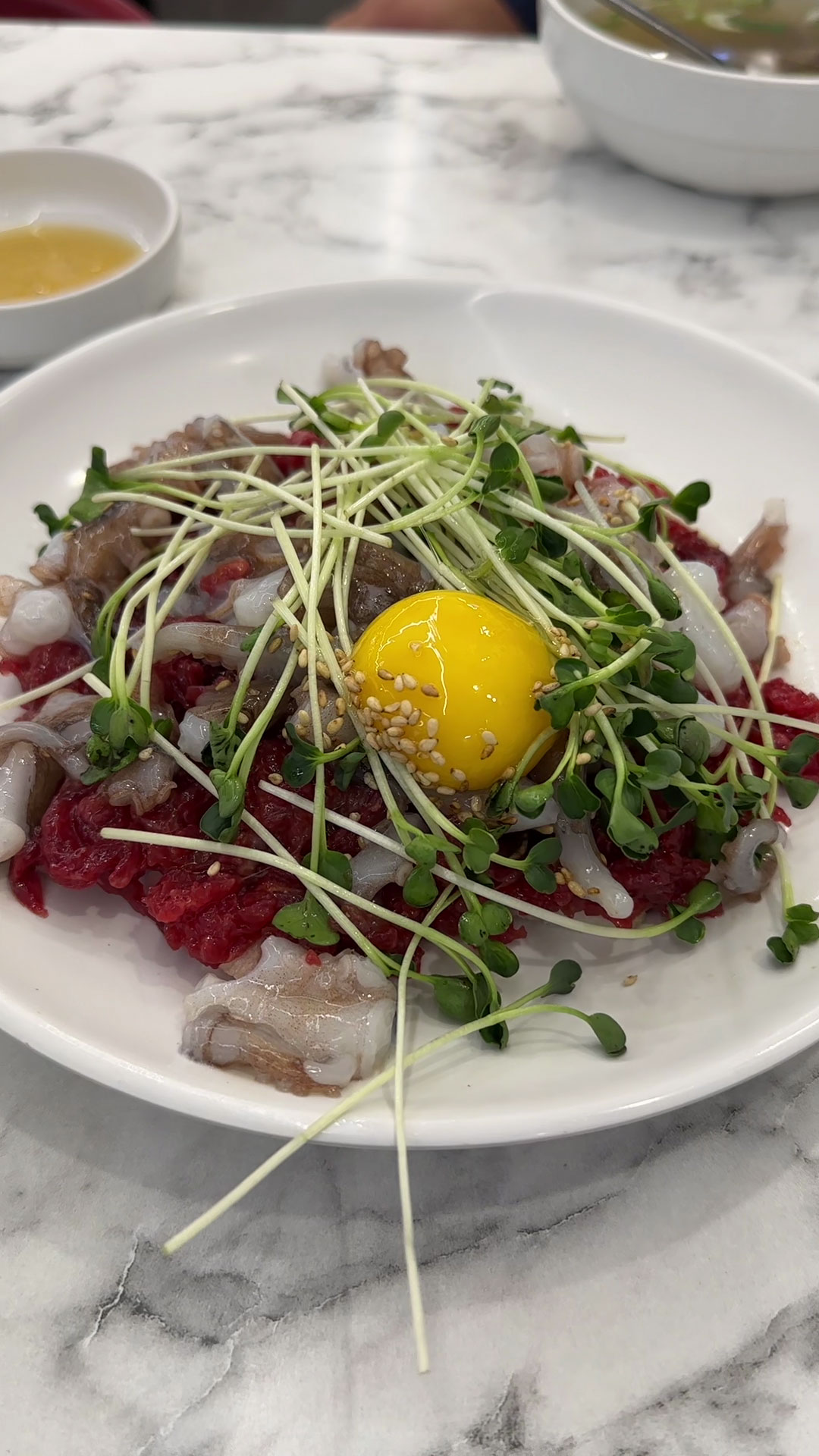
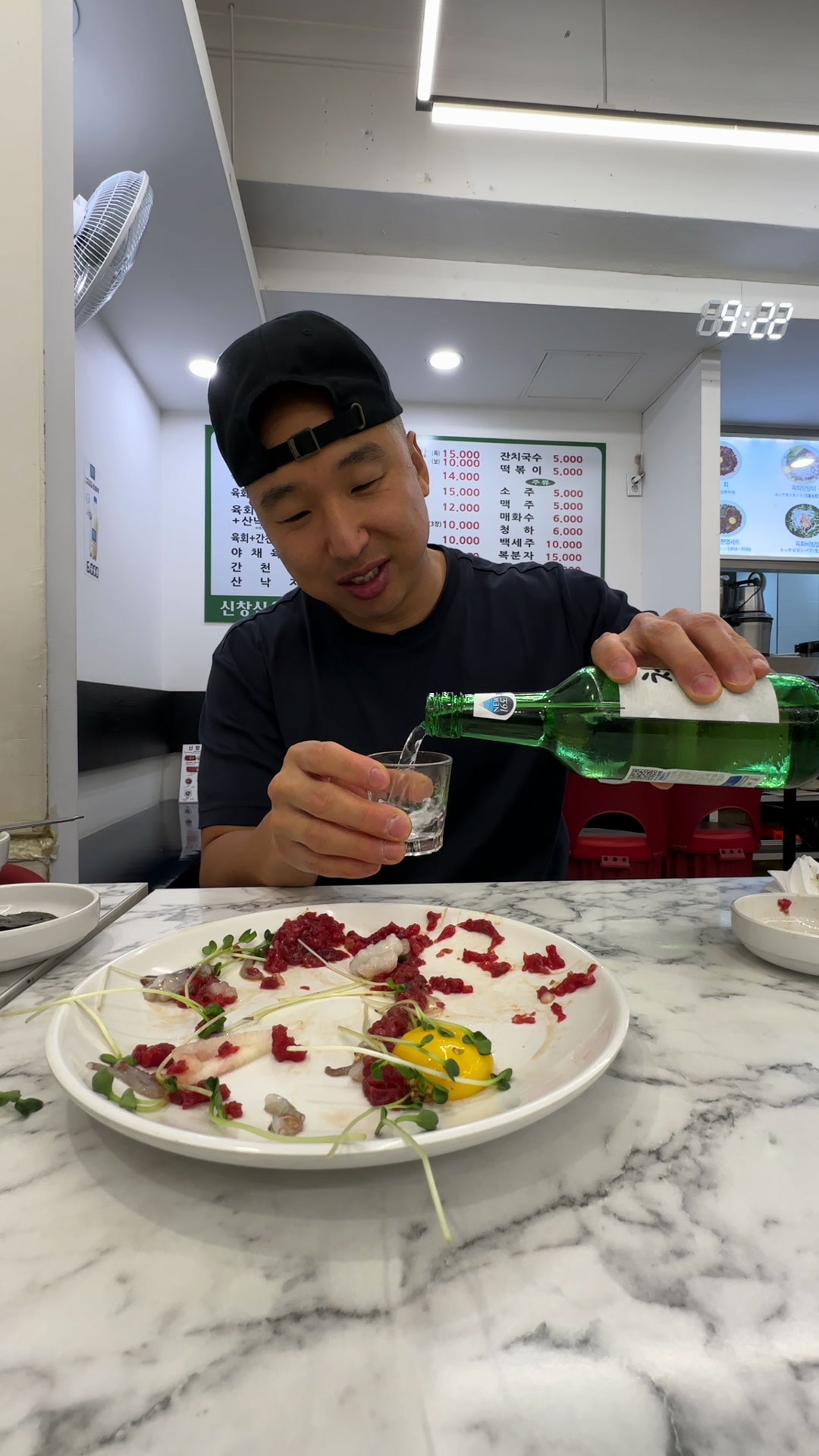
Yukhoe is seasoned raw beef, while tang tang is chopped squid tentacles, and it’s still squiggling when served.
This is one of the dishes I make sure to have whenever I’m in Korea!! I love to dip every bite in sesame oil and make a little ssam with seaweed paper, perfect with soju, beer, or the combination of both aka somaek!
Bindaetteok
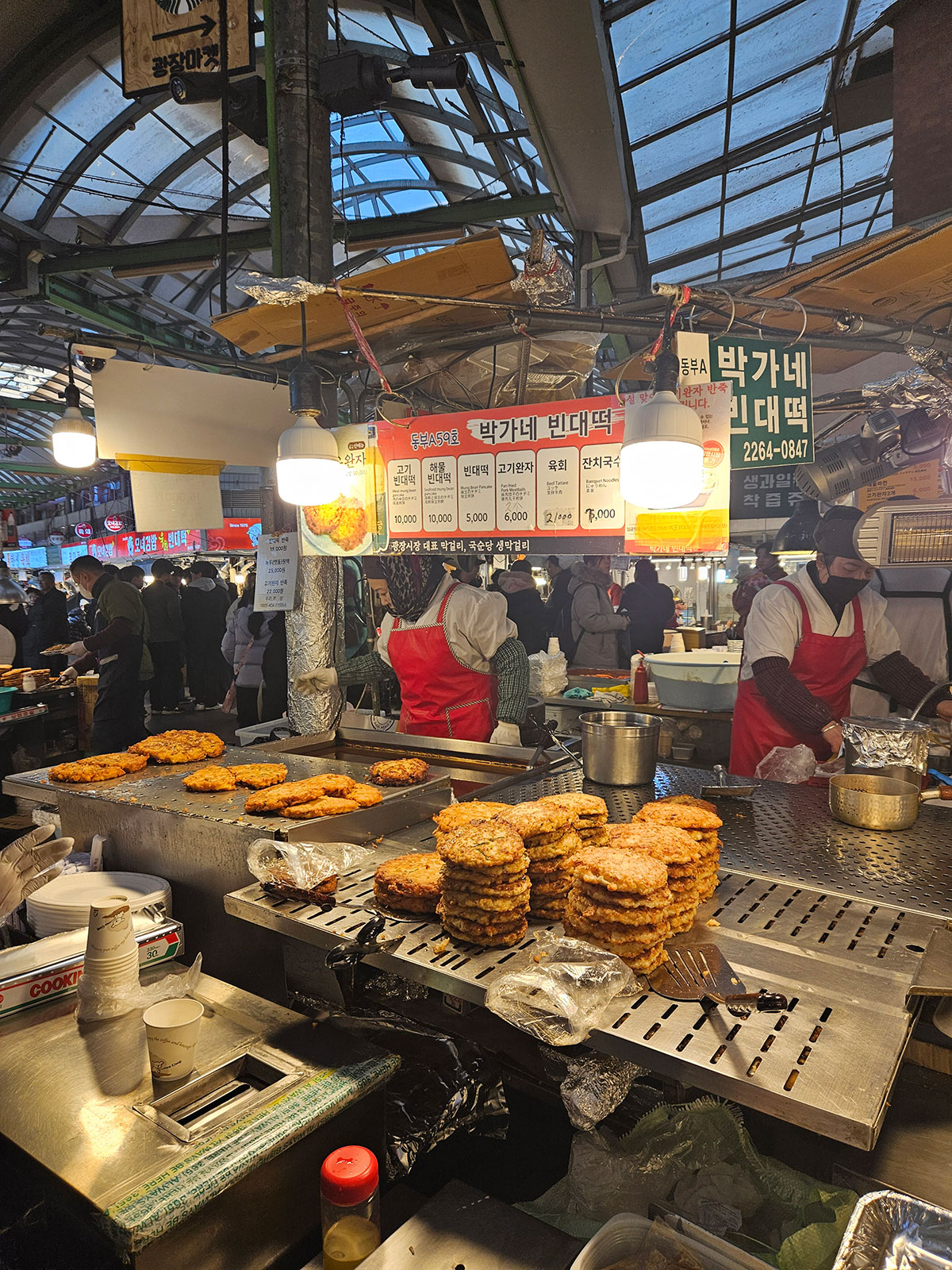
Gwangjang Market is very famous for these Mung Bean Pancakes. These thick, crispy pancakes are made from ground mung beans and minced pork, shallow-fried on a griddle.
You’ll see right in the middle of the market that many stalls are selling the same item, so simply use your best judgment on which one you will try.
Buchimgae
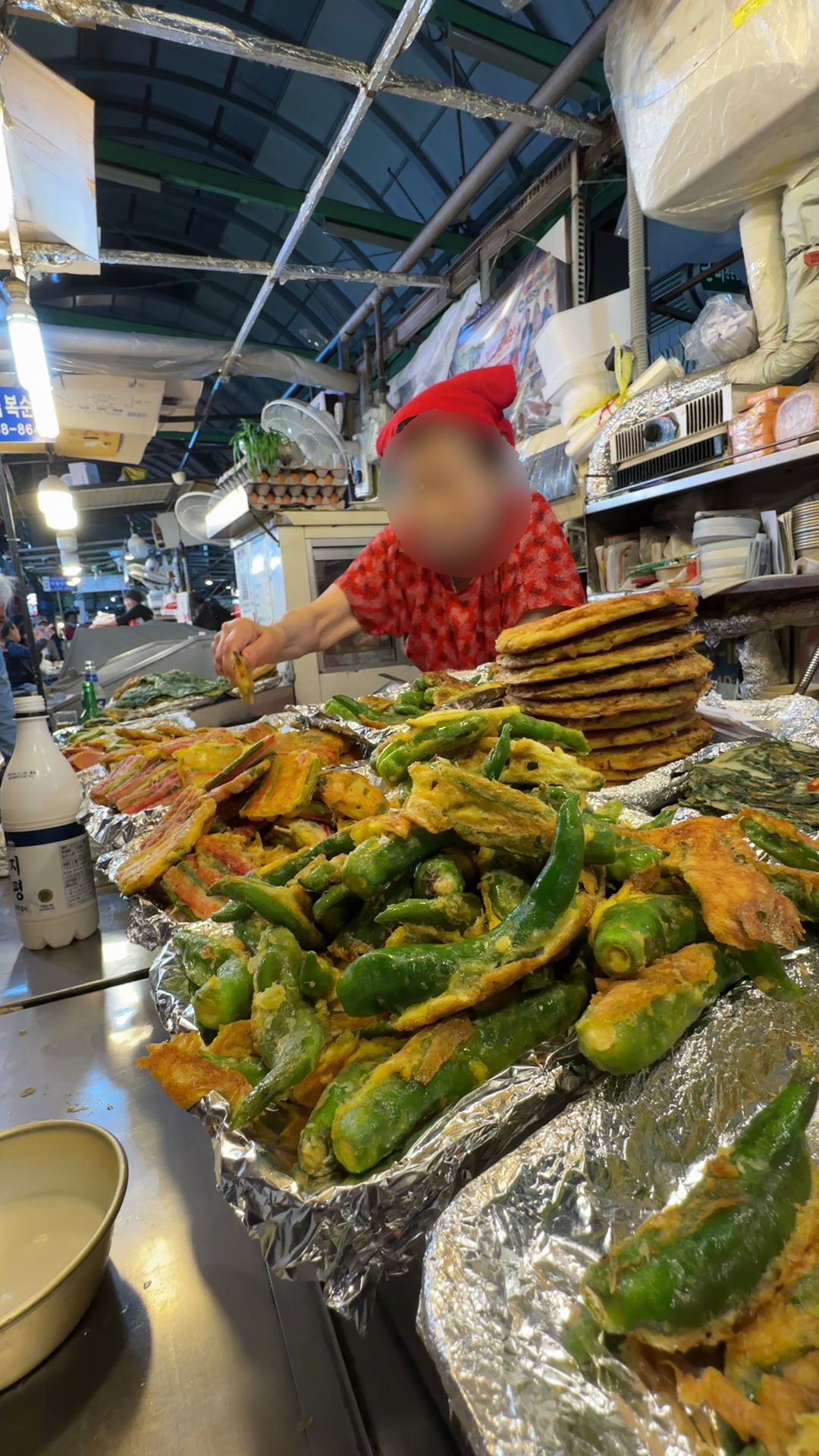
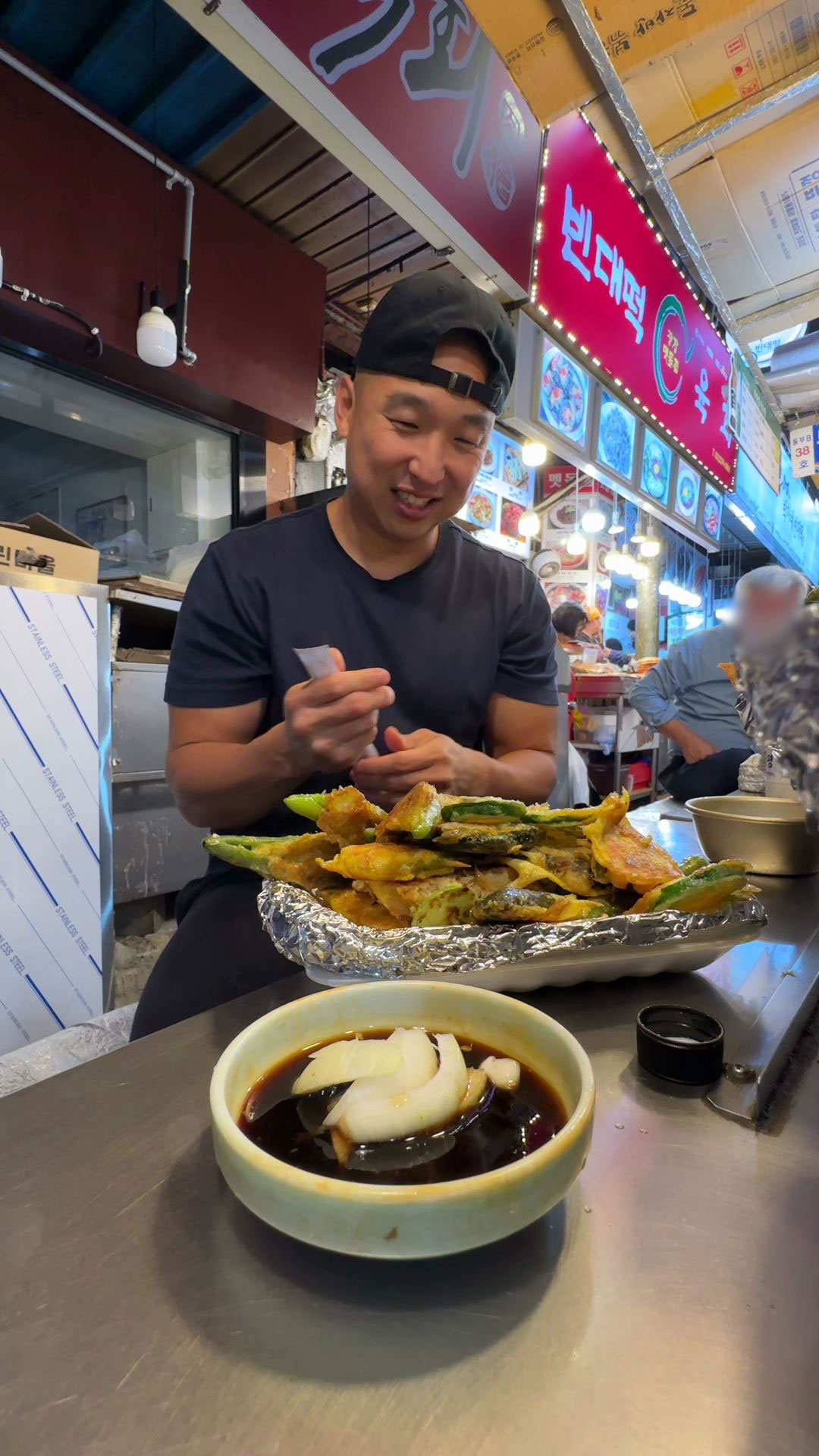
These are Korean-style pancakes or jeon. Basically, they are deep-fried vegetables coated in a light batter. Some veggies are filled with meat to make them more hearty. This is perfect with some makgeolli or rice wine to wash off the oiliness.
Sashimi and Raw Marinated Crab
Sashimi is also a very common dish in Korea. Sidewalk aquariums are rampant here so the fish is guaranteed served fresh, while the carcass is turned into stew.
Besides this, other seafoods like crab, shrimp, and squid are marinated raw for a savory finish. These are refreshing delicacies you must try!
Kalguksu with Dumplings
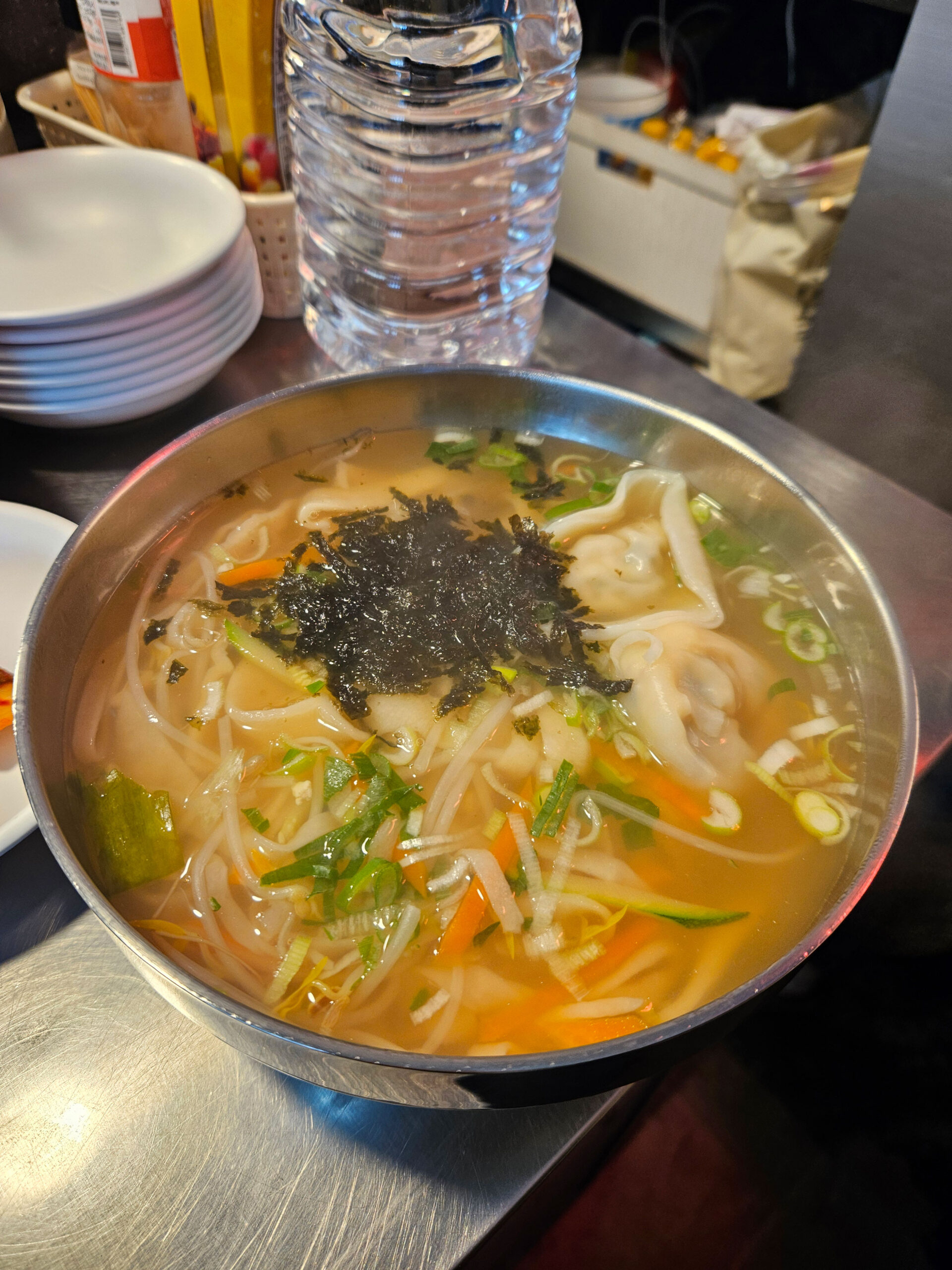
If you’ve never been to Namdaemun Market’s Kalguksu Alley, which I highly recommend, you can also taste this noodle dish in Gwangjang Market.
Kalguksu is straight-up noodles on seafood broth, so we usually get it with a side of pork, vegetables, or kimchi dumplings (which are handmade btw!!) for a more hearty meal.
Kkwabaegi
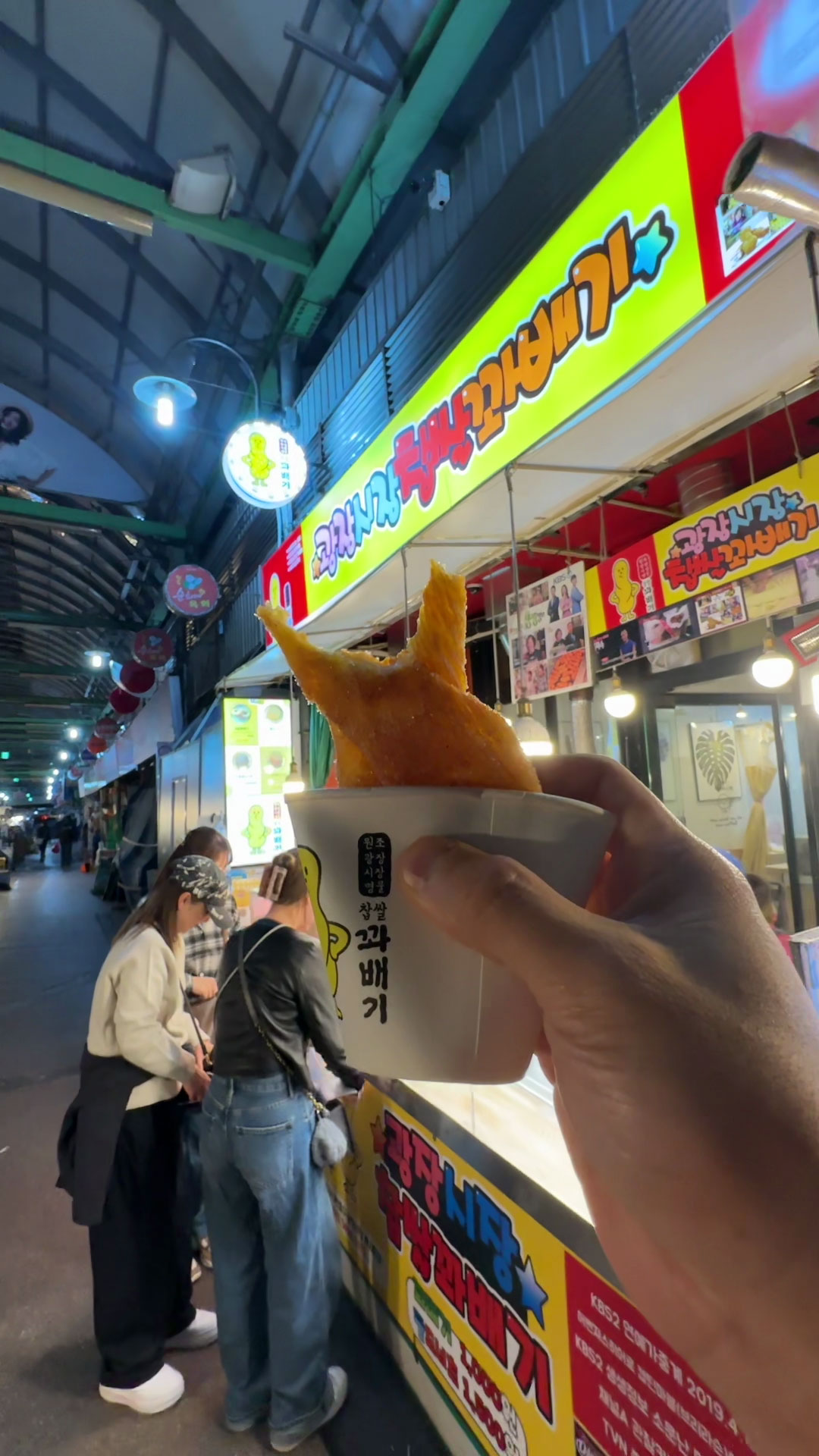
This is a twisted doughnut—crispy on the outside, light and airy on the inside. It is usually tossed in cinnamon sugar or filled with either red bean, sweet potato, or black rice. Very simple, but so good as well. The perfect cap/dessert to your day of exploration.
Besides this, there are also other breads in the market like hotteok, gilgeori toast, garlic cream cheese bun, etc. The outskirts of the market also have new and trendy cafes that offer a wide variety of pastries. You can check these out in between all the savory food you’ll be eating.
Love-Hate Relationship with Gwangjang Market
Gwangjang Market is swarmed with tourists daily, and it’s just overflowing that sometimes you can barely sit. This makes people think it’s not worth the time and effort.
I’d like to argue that, given how big and accessible to tourist spots this market is, you can’t deny the fact that it’s a one-stop shop for everything you want to see and taste, especially with traditional Korean street food and delicacies. If you’re up to try dishes than Korean Fried Chicken, Korean BBQ, or ramen, this is a good place to go!
People also say it has become “overrated” or is a “tourist trap”, where you pay for mid food. I agree at some point, but that’s because there’s a lot of the same food inside, so it could be a hit or miss for some people, especially since each stall can have different recipes or cooking techniques for the same thing. This is the reason why I said that going here may require your best judgment before trying anything.
Honestly, though, what I love about this is the heritage, hustle, and dedication. You’ll notice that there are a lot of elderly locals who are selling in the market, and they could be the second or third generation to whom the recipes are passed down. And they do this every day—serving thousands of people. I find that amazing.
Furthermore, some food can admittedly be mid, but the vibes are unmatchable. Your surroundings can be so fast-paced, but once you get that first bite, then follow it up with some soju or beer, that feeling, you can’t get that anywhere else. This is where you taste and experience the real Korea.
Check out my other recommendations for your next Korea Trip:
- What to Do in Han River
- Complete Guide to Noryangjin Fish Market
- Where to Eat in Korea

Leave a Reply